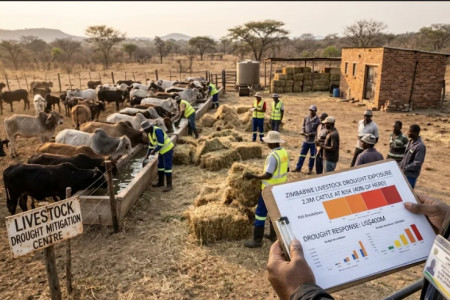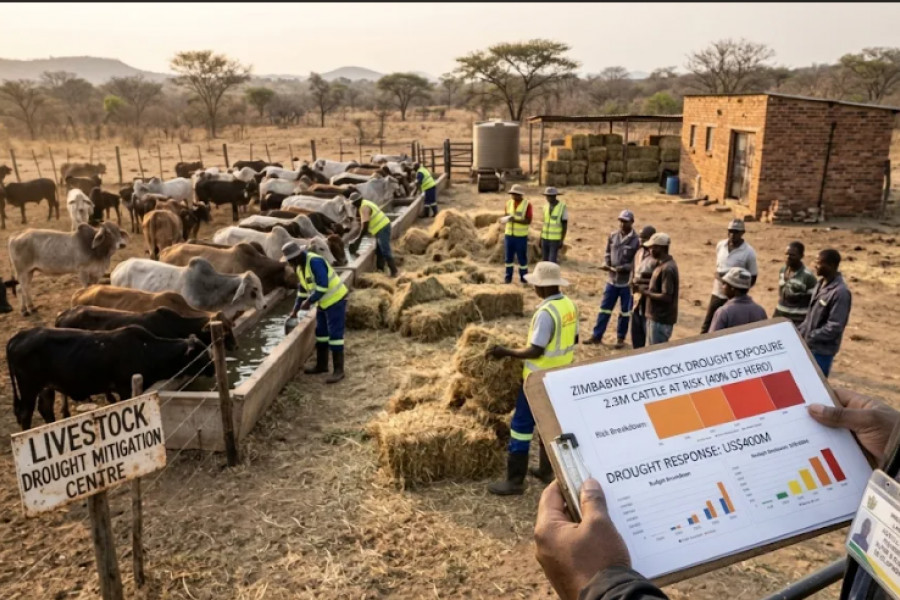
- Cabinet has identified 2.3 million cattle, representing 40% of Zimbabwe's national herd, as being at risk from drought during the 2026/27 agricultural season
- Government has established drought mitigation centres in 1,118 of the targeted 1,527 wards, leaving 409 wards outstanding as livestock farmers prepare for potential grazing and water shortages
- Treasury has allocated US$400 million towards the national drought response, while strategic grain reserves stand at 374,218 tonnes against a target of 600,000 tonnes

Harare- Zimbabwe faces a substantial threat to its rural livestock economy after Cabinet identified 2.3 million cattle, representing 40% of the national herd, as being at risk from drought during the 2026/27 agricultural season. The warning comes as Government prepares for anticipated El Niño conditions, with more than a quarter of the country's targeted ward drought mitigation centres still outstanding.
The exposure places considerable pressure on livestock protection measures at a time when cattle remain an important source of household wealth, agricultural productivity and income for rural communities.
According to the Thirty Eighth Post Cabinet Press Briefing issued on 24 November 2026, Agriculture Minister Anxious Masuka presented the country's updated Summer Plan, incorporating measures to mitigate the anticipated drought. Cabinet identified 2,299,284 cattle as vulnerable and confirmed that strategies covering water, supplementary feed and fodder supplies had been put in place. The figure implies a national cattle population of approximately 5.75 million animals, with the potential disruption extending across a significant share of Zimbabwe's livestock production base.
The exposure carries consequences beyond the immediate livestock industry. Cattle serve as productive assets for communal and commercial farmers, providing breeding stock, draught power and income from animal sales. In many rural households, livestock also functions as a reserve of wealth that can be used to meet education, healthcare and other expenses. A severe drought can reduce this asset base through declining animal condition, lower reproductive performance, distressed sales and mortality, with financial consequences extending across several agricultural seasons.
The commercial effects typically develop before significant livestock deaths occur. As pasture and water availability deteriorate, farmers face increasing costs for supplementary feed and animal maintenance. Those unable to finance these requirements may be forced to sell cattle earlier than planned, potentially increasing market supplies and depressing producer prices. A prolonged drought can subsequently reduce breeding herds and future marketable stock, affecting abattoirs, meat processors and other businesses dependent on livestock supply.
The importance of early intervention is therefore considerable. Maintaining breeding animals and protecting livestock condition can preserve productive capacity, while delayed feeding and watering interventions increase the likelihood of irreversible losses. For smallholder farmers who depend on oxen for land preparation, a reduction in animal strength can also affect the following cropping season, creating a further connection between livestock protection and national food production.
Cabinet's implementation figures expose an important gap in the national preparedness programme. Government has established 1,118 Ward Drought Mitigation Centres against a target of 1,527, representing approximately 73% completion. The outstanding 409 centres account for nearly 27% of the planned network, although Cabinet did not identify their locations or disclose the operational capacity of facilities already established. Their distribution is important because livestock exposure varies across districts according to grazing conditions, water availability and the ability of farmers to obtain supplementary feed.
The effectiveness of these centres will depend on the resources available to support farmers. Establishing a facility provides a basis for coordinating drought interventions, while protecting livestock requires accessible water, fodder supplies, veterinary services and transport arrangements. Cabinet's briefing does not quantify the feed available, the number of cattle that can be supported or the funding allocated specifically to the livestock programme. These omissions limit an assessment of how much of the identified herd can be protected under the measures announced.
Treasury has allocated US$400 million towards the wider drought response, covering interventions under the national Summer Plan. The programme includes strategic grain reserves, climate resilient agricultural production, financing arrangements, livestock protection, import planning and early warning systems. The allocation provides resources for national preparedness, although the absence of a livestock specific financing breakdown makes it difficult to establish the amount available for feed procurement, water development and direct assistance to affected farmers.
The grain reserve position introduces another consideration. Cabinet reported that the Grain Marketing Board held 374,218 tonnes of grain, equivalent to 62.4% of the government's 600,000 tonne target. The country consequently requires an additional 225,782 tonnes to reach the planned reserve level. Stocks have increased from the 365,000 tonnes reported at the end of October, although the remaining requirement demonstrates the scale of procurement needed to strengthen national food security before the full effects of a potential drought become apparent.
Agricultural preparations have progressed further in other areas. Government reported the establishment of approximately 17.94 million Pfumvudza/Intwasa plots covering 1.17 million hectares, exceeding the planned target by 12%. The national irrigated area stands at 308,969 hectares, with 119,068 hectares identified for irrigated maize production. Cabinet has consequently shifted emphasis towards ensuring that farmers properly implement conservation agriculture practices to achieve the expected yields.
The country's water storage position provides some protection. National average dam levels stand at 81% of capacity, above the 59% normally expected at this stage of the year. These reserves support irrigation and water supply where appropriate infrastructure exists, although their geographical distribution and accessibility determine the benefits available to livestock farmers. High national dam storage cannot independently resolve shortages of natural grazing or guarantee water availability in areas located far from established supply infrastructure.
Treasury's 2027 Fiscal Risk Statement demonstrates the wider economic exposure associated with a severe agricultural shock. Under a scenario involving an 18% contraction in agricultural output, economic growth would slow from the projected 3.5% to approximately 2%, while additional government expenditure would reach US$333 million. The fiscal deficit would deteriorate by approximately US$512 million relative to the baseline, increasing from 0.5% to 1.2% of GDP. These are modelled outcomes under severe drought conditions, with the actual impact dependent on rainfall and agricultural performance during the season.
For the livestock industry, the financial consequences could extend to the availability of cattle for slaughter, the cost of animal feed and the ability of farmers to rebuild productive herds. Businesses involved in livestock trading, veterinary services, meat processing and agricultural finance would face changes in demand and operating conditions. The loss of breeding animals could also constrain future livestock production, prolonging the economic effects beyond the immediate drought period.
Government's response will consequently require timely information on livestock condition, pasture availability and the geographical concentration of drought risk. District level reporting would strengthen decisions on supplementary feeding, livestock movements and organised destocking before declining animal condition substantially reduces market values. It would also help authorities direct limited resources towards communities where intervention can preserve the greatest productive value.
Equity Axis takes the view that Cabinet's identification of 2.3 million cattle at risk establishes a measurable threat to Zimbabwe's rural productive assets, with the immediate priority being the operational readiness of the livestock protection programme. The Ministry of Agriculture should disclose the geographical distribution of vulnerable cattle, complete the outstanding mitigation centres in the most exposed districts and establish measurable targets for feed availability, water access and livestock protection. Treasury should separately identify the livestock component of the US$400 million drought allocation, allowing the adequacy and deployment of resources to be assessed against the number of animals at risk. Early destocking arrangements, veterinary support and protection of breeding stock should form part of a coordinated response designed to preserve household wealth and future agricultural capacity.
The latest Cabinet figures demonstrate progress in agricultural preparations, alongside substantial outstanding requirements in livestock protection and strategic grain accumulation. Zimbabwe's exposure extends beyond potential reductions in agricultural output to the loss of productive assets that support rural incomes and future farming activity. With 40% of the national cattle herd identified as vulnerable, the effectiveness of the drought response will depend on how quickly the announced resources and interventions reach farmers before pasture, water and livestock conditions deteriorate.
Equity Axis News