- Zimbabwe's annual US dollar inflation rose to 3.4% in November 2026 from 3.2% in October, with monthly inflation accelerating to 0.3% as food and non alcoholic beverages recorded the main price increases
- Agricultural producer prices increased by approximately 3% in US dollar terms over September and October, substantially outpacing the 0.4% rise in the broader non agricultural producer index during October
- The Total Consumption Poverty Line reached ZiG1,359.39 per person in November, equivalent to approximately US$51, as Treasury prepares for a potential drought shock that could weaken agricultural production and increase food supply costs

Harare – Zimbabwe's food supply chain is facing renewed price pressure after agricultural producer prices increased by approximately 3% in two months, coinciding with an acceleration in US dollar consumer inflation to 3.4% in November 2026. The increase comes as businesses prepare for a potentially difficult agricultural season, with food and non alcoholic beverages accounting for the main consumer price increases.
The emerging pressure places greater importance on agricultural supply, procurement costs and retail pricing decisions as Zimbabwe enters 2027.
According to the Zimbabwe National Statistics Agency's November 2026 Prices Statistics report, annual US dollar inflation increased by 0.2 percentage points from 3.2% in October to 3.4% in November. Monthly inflation accelerated from 0.1% to 0.3%, showing a faster increase in consumer prices during the latest reporting month. The movement reversed October's moderation in annual US dollar inflation, with the most pronounced price increases recorded within food and non alcoholic beverages.
Inflation measured in Zimbabwe Gold followed a different trajectory. Annual ZiG inflation remained unchanged at 4.3% between October and November, while monthly inflation held at 0.2% for a second consecutive month. The stability of the local currency index contrasts with the acceleration in US dollar prices, although food remained an important source of monthly price increases in both currencies. The divergence establishes that inflationary conditions are developing at different rates across Zimbabwe's dual currency pricing system.
The weighted Consumer Price Index, which incorporates expenditure in both currencies, recorded annual inflation of 3.6% in November, increasing from 3.5% in October. Monthly weighted inflation rose from 0.1% to 0.3%, matching the latest increase in the US dollar measure. The weighted figures provide a broader assessment of consumer price changes across the economy, with the November increase confirming that higher food prices are contributing to overall inflation despite the stability of the ZiG annual rate.
The more consequential development concerns agricultural production costs. ZIMSTAT's latest producer price figures show that US dollar agricultural prices increased by 1.8% in September and a further 1.2% in October, amounting to approximately 3% over the two months. In ZiG terms, agricultural producer prices increased by 1.6% in September and 0.4% in October. This establishes a more pronounced cumulative increase in US dollar agricultural producer prices, although the monthly pace moderated in October under both currency measures.
The US dollar producer price index excluding agriculture increased by 0.4% in October, compared with 1.2% for agriculture. The difference identifies agricultural production as an important source of recent cost pressure. For food manufacturers and retailers, continued increases in agricultural input costs can raise procurement requirements and place pressure on operating margins, particularly where higher costs cannot be immediately recovered through selling prices.
Agricultural commodities enter the consumer market through processing, storage, transportation and distribution, with each stage influencing the final selling price. Sustained increases in producer prices can raise procurement costs for millers, food processors and other businesses dependent on agricultural raw materials. Their ability to absorb these increases will depend on operating margins, inventory positions, consumer demand and competitive conditions.
Businesses holding inventory acquired at earlier prices may experience temporary protection from rising producer costs, while subsequent procurement can require higher working capital. Passing those increases to consumers may preserve gross margins, although higher retail prices can weaken purchasing volumes among households operating under constrained incomes.
The concentration of price pressure within food is particularly consequential because other producer cost indicators remain relatively subdued. ZIMSTAT reported that US dollar civil engineering material prices were broadly unchanged in October, while the civil engineering plant price index remained constant at 91.94. The non agricultural producer index increased only modestly. These figures do not establish that all non food costs are stable, but they demonstrate that agricultural producer prices have recently increased more rapidly than several other measured production cost categories.
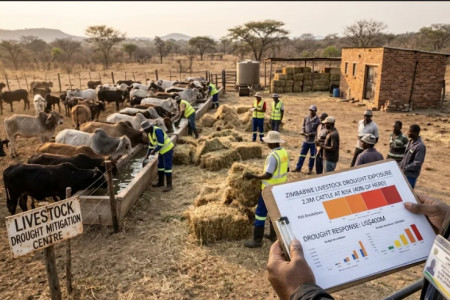
The latest inflation figures also arrive as Zimbabwe prepares for the possibility of adverse agricultural conditions during the 2026/27 summer season. Cabinet's 24 November briefing identified approximately 2.3 million cattle, representing 40% of the national herd, as being at risk from drought and confirmed that water, feed and fodder mitigation measures were being implemented. Government also reported that the Strategic Grain Reserve held 374,218 tonnes against a target of 600,000 tonnes, leaving a shortfall of approximately 225,782 tonnes.
These figures establish the importance of agricultural supply management as the country enters 2027. The grain reserve position provides an indication of available public stocks against Government's accumulation target, while the livestock exposure introduces risks to future cattle supply and animal production costs. The eventual effect on consumer prices will depend on rainfall, harvest outcomes, feed availability and the timing of grain procurement or imports.
Treasury's 2027 Fiscal Risk Statement models a severe drought scenario under which agricultural output contracts by 18% and economic growth slows from the projected 3.5% to approximately 2%. Additional fiscal expenditure could reach US$333 million, while the deficit would deteriorate by approximately US$512 million relative to the baseline. These estimates quantify the government's exposure to a major agricultural shock, with potential effects extending to food supplies, import requirements and household incomes.
The inflation outlook therefore carries an additional supply risk beyond conventional monetary conditions. Treasury projects average inflation of 4.9% in 2027, compared with approximately 3.9% in 2026, within its baseline macroeconomic framework. That projection concerns the official local currency inflation outlook and should be distinguished from ZIMSTAT's separate US dollar consumer price index. A severe drought could generate additional food cost pressure, although its precise impact on either index cannot be determined from the current data.
The consequences for household purchasing power are already evident in the cost of basic consumption. ZIMSTAT placed the Food Poverty Line at ZiG930.99 per person in November, representing the estimated minimum cost of food required to meet daily energy needs of 2,100 calories. The Total Consumption Poverty Line, which incorporates essential non food expenditure, stood at ZiG1,359.39 per person.
Using the Reserve Bank's exchange rate of approximately ZiG26.55 per US dollar on 23 November, the Total Consumption Poverty Line was equivalent to about US$51 per person. For an illustrative household of five, the corresponding expenditure benchmark would amount to approximately ZiG6,797, or US$256 monthly. Actual household needs vary according to composition and consumption requirements, while exchange rate conversion provides an indicative comparison rather than an independently measured US dollar poverty threshold.
Food price increases carry particular consequences for households allocating a substantial share of income towards basic consumption. Even modest changes in monthly inflation can affect purchasing decisions where expenditure is concentrated on staple foods, cooking oil, vegetables, meat and other essential products. For retailers and manufacturers, this creates a commercial environment in which higher procurement costs may coincide with consumer resistance to price increases and changes in the quantities purchased.
For food businesses preparing their 2027 operating plans, the relevant consideration is the pace at which agricultural input prices change relative to selling prices and inventory turnover. Procurement contracts, supplier diversification and working capital arrangements will influence their ability to maintain product availability without excessive inventory costs. Companies exposed to imported raw materials will also need to assess foreign currency requirements and regional agricultural supply conditions should domestic production weaken.
Therefore, November's inflation figures warrant particular attention because agricultural producer prices are increasing faster than several other measured cost categories while food is already contributing to renewed consumer inflation. The immediate priority for food manufacturers and retailers is to establish the extent of their exposure to agricultural commodities, identify procurement costs that could affect margins and determine how much additional working capital may be required as inventories are replenished. Treasury and agricultural authorities should strengthen the publication of grain stock movements, commodity supply assessments and planned imports, providing businesses with clearer information for procurement and pricing decisions.
Zimbabwe's inflation environment remains relatively stable across both currencies, although the composition of recent price increases introduces risks for household budgets and food supply chains. The November figures establish an early deterioration in consumer food price conditions alongside rising agricultural producer costs. The December and January releases will provide further evidence of how these pressures develop as the agricultural season progresses, with rainfall outcomes, domestic grain availability and producer costs becoming increasingly important to the country's inflation trajectory.
Equity Axis News